embracing enchantment: lessons from the Big Magic Retreat

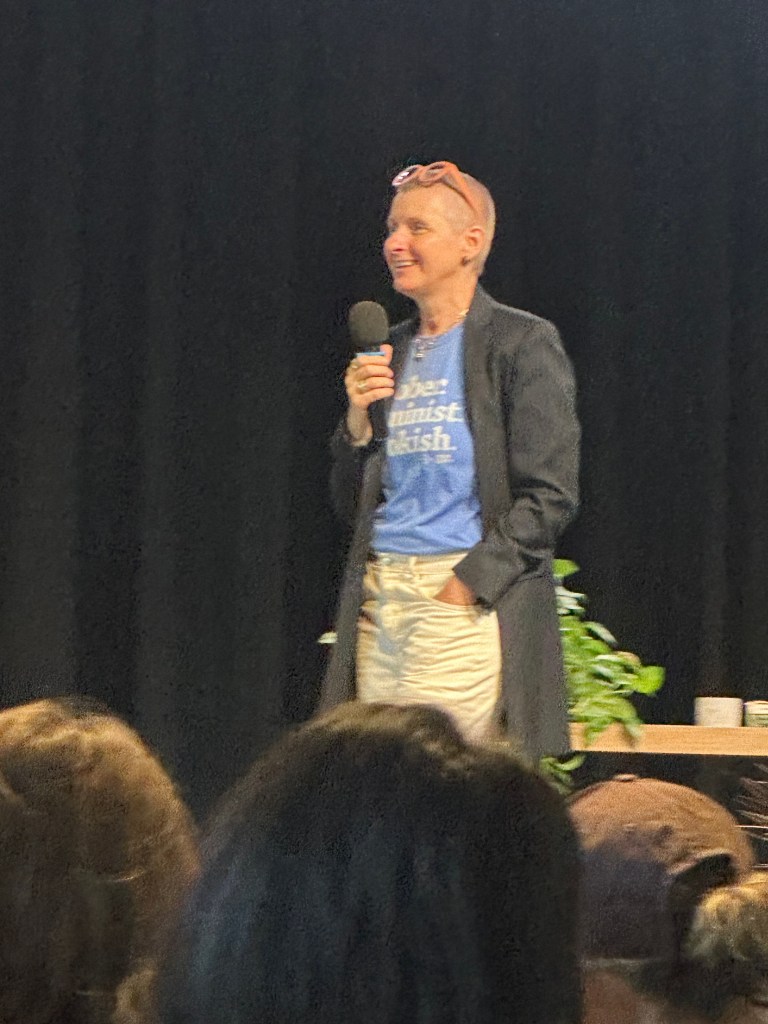
I just returned from the Big Magic Retreat in Cleveland, Georgia with the brilliant writer and one of my all-time favorites, Elizabeth Gilbert. The retreat was a birthday gift from Daniel, and what a gift it turned out to be. I met phenomenal women from all over the country – Hawaii, California, Ohio, Georgia.

We learned new mindfulness practices to help center my intentions for creative work, moved my body in new ways thanks to the African Movement dance class, threaded together beads and string in the ancient japa mala technique, walked and sat in nature amid crisp Fall air, managed to get quiet and still, and reconnected with my inner child thanks to the rustic sleep-away camp setting.

The experience introduced me to a new layer of myself and generously filled my cup. I have begun submitting query letters to potential agents and am anxious/freaked/energized to be able to introduce my debut novel to professionals in the industry.  One of them will be my agent who guides me through the journey of publishing and sharing my work with the world.  What a magical realization! 

The process of pitching my manuscript is thrilling and humbling, filled with equal parts rejection, terror, opportunity, and hope at every turn. Speaking of hope, I hoped this retreat would fuel me with renewed curiosity and confidence to do this “brutiful” thing (to quote Glennon and Amanda Doyle) of putting my work out there for critics to consume. And it did exactly that. 

Now that I’m back home, I have recommitted myself to daily quiet in scripture, blank paper, prayer and meditation. For my meditation this morning, I chose to sit on my patio rug and listen to the Ignatian Saturday Examen prayer, which invites you to reflect on the previous week and the guidance you seek for the week ahead.

Then I transitioned to the Daily Trip meditation led by Jeff Warren. The theme today was about tapping into a state of wonder, imagining that you were born in this moment and experiencing breathing for the first time. What would you notice? What would you see?

I rounded my back and let go of my posture, completely relaxing into my seated position. I imagined being able to see my lungs inflate and deflate in their real, anatomical shapes. Then I imagined them as a single round balloon inflating and deflating inside me. Then, the clearest visual came to me as I sat and breathed.

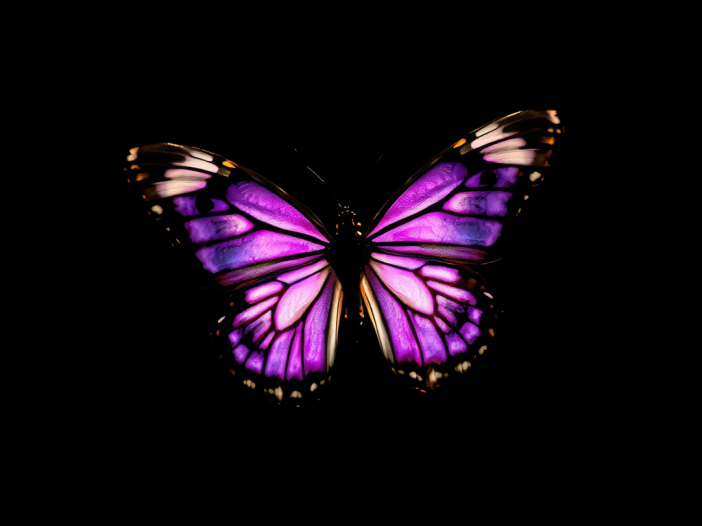
A butterfly. Its wings displayed an intricate pattern of purple, white, black, and gold. They flapped slowly up and down in rhythm with my breath. All around the butterfly was inky black night, yet the butterfly was lit by brilliant sunlight.

As thoughts and distractions arose, as they inevitably do each time during meditation, I checked back in with the butterfly and found it still perched inside me but keeping its position with some difficulty now.  Its wings were now rippling as if in an unseen wind.  Then, as I recentered my focus on its movement, the wind ceased, and the butterfly’s wings began to gently rise and fall, once again safe and secure to be there and dance. I smiled and opened my eyes.

This meditation was a beautiful reminder that the moments in our lives of pure tranquility are often fleeting and fragile. I am grateful I was able to round my body in stillness this morning and for a moment, observe, reflect, and just be present to beauty. Elizabeth Gilbert calls moments like these “enchantment” – where you find yourself in “the warm, vanilla pudding hum of wonder and well-being” grateful you were there, in that moment, aware and present to the experience.

One of the journaling exercises we did at the retreat was to write a letter from our enchantment, using the prompt: “Dear _____, I am your enchantment, and this is what I want you to know. I love it when…” and then begin each sentence with “I love it when” and see what came up.  

I’ll jump to the end and share that my letter from enchantment ended with “I love that we had this conversation and that we’ll be seeing a lot more of each other from now on.”

… and this morning, see each other we did. 🦋

‘when breath becomes air’

I just finished reading Paul Kalanithi’s book, When Breath Becomes Air, which was a finalist for the Pulitzer in 2016 and this month’s pick for my book club. The book is a memoir of the last seven years of Paul’s life when the grueling hours of a neurosurgical residency burn intensely on one end, a diagnosis of terminal cancer hungrily devours the other, and beautiful, brutal truths reveal themselves in the quickly diminishing space between. The closing chapter was authored by Paul’s wife, Lucy, as she describes Paul’s final days, burial and the legacy he is leaving behind through his research discoveries in neuroscience, the countless lives changed through his surgical expertise, and now through his story. The final page is a family portrait of Paul and Lucy and their eight-month-old daughter. 

When I closed the finished book, I cried alligator tears produced by actual sobs, thinking about the difficulty of his chosen profession, his triumph of reaching graduation, and his desire to bravely continue practicing as long as he could knowing that he was going to die before his daughter would be old enough to remember him. And the strength and presence of mind of his wife as they faced the weight of their reality together. What a read. I came in from the patio with swollen eyes and craving long squeezes from my guy. 

Later in the morning, Daniel and I went to the beach. He was laying on a blanket getting sun on his back, and I was sitting in one of the reclining chairs watching the gulls feed. I looked to my right and saw a man and a woman walking together. They looked to be in their eighties and had stopped to inspect some shells on the shore. They were holding hands – his left, her right – and in their opposite hands, each held a mask and snorkel signaling they had just wrapped up a morning swim. 

“I want to be those people,” I said to Daniel. He raised his head up. “Which ones?” he asked. “You know the ones,” I said, nodding in their direction. He smiled and rested his head back on his forearms. 

The couple resumed their walk, and as they passed by my chair, I had to speak to them. 

“I love your love!” I said. They smiled, and the man took a few steps my way with his arms stretched out to his sides. I thought he may give me a hug. “What was that?” he asked as he got closer and I remembered their age. I stood up from my chair and walked toward them at the surf. 

“I love your love,” I said a bit slower and louder, and drawing an imaginary heart around them for emphasis. “It’s so obvious that you love each other very much.” 

“Oh, thank you!” he said proudly, with a hint of an English accent, watered down from a lifetime in the states. 

“How long have you been together?” I asked. He looked lovingly at his wife and then said, “Well, we got married in 1958, so that should tell you something.” 

“Wow, that’s beautiful,” I said, watching him again take his wife’s hand. “Enjoy your walk.” They thanked me, smiled and continued on their way. Daniel raised his head up again and watched with me as they walked away. “I knew you were going to have to speak to them,” he said. “Yep,” I replied with tears welling in my eyes. 

Sixty-eight years together, and they are still active and enjoying each other’s company. “That was one of the most beautiful things I’ve ever seen, truly,” I said, my voice breaking a bit. 

It really had been. Thinking about the gift of longevity and that couple’s many years together contrasted with the chasm of loss and what might have been in the book I had just finished reading.

“Think about it…,” I said. “If we are together that long, then it’s a blessing to think we’re not yet even a third of the way through our marriage!” 

“Oh Lord,” Daniel said sarcastically, his voice muffled on his arms. 

I got out of my chair and sat on his bum, stretching out my back along his. 

“Tailbone to tailbone,” I said, rocking side to side and giggling at his groans. 

As I leaned my head back against his and closed my eyes, I gave thanks for silliness after 20 years of marriage and the gift that couple had given me – the hope that this really could be just the beginning. 

flying (less) fearfully

I’ve traveled to nearly all 50 states, down south to the Virgin Islands, across the Atlantic to Europe, as far north as Finland, and as far east as Okinawa, Japan. Yet, if I go more than a few months in between flights, it’s like my memory bank flushes all of the sensations of flying entirely, like the gray marbles in Inside Out growing dim. Sure, I know how to buy my ticket, check-in, board, and all of that jazz, but it’s the actual sensory experience. Poof. Gone. Like it never even happened. Now, if I was a thrill-seeker, I might approach it like a child going on an adventure. But the thing is, I’m really more of a home body who thrives in layers of cozy creature comforts. So if it’s been a while since I’ve been on a plane, I feel a form of primitive anxiety that traces back to, well I guess, the first time I ever flew into the complete unknown.

I’m actually on a flight right now, my first since February. In months, that’s eight too many of having my feet firmly on the ground. Did I mention I live at sea level? So, yeah, I don’t even have altitude going for me. Maybe that’s why it feels so completely unnatural to be hurtling through the air at a zillion miles per hour (I mean, does 500 mph really translate all that well to ground speed?).

I should also mention that I may have been a sun worshipper in a past life or a moon cycle hippie – okay, not really, I’m way too Episcopalian for all that. But I do have an uncanny appreciation for the sky: the stars, planets, moon and sun. If there is a sunset happening, I simply can’t look away. It feels as if anything less than unblinking, in-the-moment presence is utter sacrilege. There is this unbelievably insane beauty unfolding right there – like RIGHT THERE – begging for someone, anyone to notice, yet so few pause and look up from their screens, to-do lists and lives to even take note. Maybe I’m compelled to do all the taking note for those who aren’t. Or maybe the sky’s just really pretty, which is reason enough for me. 

So here I am in said sky that I love, among the clouds, watching the sun set. I feel so grateful, truly. I think about my gentle, saint of a grandmother who, when she was alive, adored flying. I’m talking an ear-to-ear grin from wheels up to wheels down, completely lost in a marvel of modernity. Or so she said as she narrated photo albums from Switzerland, Israel, Ireland, and all the faraway places she visited in her golden years. (Most likely there was some slack-jawed snoozing and snoring somewhere in between all that awe, but you get the point.) When Gran was getting up in age, and I had begun traveling far and wide, I used to confide to her that I wasn’t a comfortable flyer. She would urge me, in those fearful moments, to think of her and how much she wished she could be on that plane with me. 

I do my best to keep Gran close to my heart each time I fly. But, I gotta tell you, from the moment we back away from the gate, journey through the slow twists, turns and straightaways of the various runways, and when the flight attendants make their announcement about the beverage service and demonstrate the security protocols, followed by the brief stop for the pilots to check the wing flaps control and countless other thingamabobs on their cockpit dash, and then that moment when the engine comes fully to life and our backs press into our seats, all the way through the springing leap the plane seems to make when the back wheels lift and we fly into the sky, and then up up and away we go, banking until we reach our flight path and level off and the flight attendants come on the mic again to share that welcome phrase that we’ve reached 10,000 feet and can now turn on our electronic devices (which always has such a classic ring to it)…. Until that moment, I’m a nervous wreck.

And then I can relax, order my in-flight beverage and zone out with a movie or show. But in that 15 minutes between the gate and the 10,000 feet, I do all the self-care things to try and tamp down the anxiety: play soothing songs, ponder aviation safety statistics, conduct meditative body scans, say prayers, take deep breaths, and each time, I’m still a mess. I don’t even want to imagine what it would be like if I didn’t go through this routine. 

But, therein lies the underlying issue, right? I’ve realized through my years-long struggle with anxiety that the fear often disguises itself as the comfort zone. The vicious cycle of calm-to-nervous-to-full-on-freak-out-to-I-made-it-I’m-alive-to-I-can-now-be-calm again is at least a pattern I recognize and strangely find comfort in purely because it’s familiar. I think that’s why for many anxiety sufferers, we tend to believe (even if we don’t admit it) that the chronic worrying is the very thing that keeps the bad thing from happening. That’s the dirty underbelly of III an intelligent mind – that our brains are creative enough to believe the completely made-up fallacy that if we just do the anxious song and dance steps consistently every time, we’ll keep arriving at the safe and secure place where we get to have that brilliant moment of clarity and reflect back on the chaos and see from a safety distance that we needn’t ever have slipped on our dancing shoes in the first place, or for that matter, ever taken them out of their box. 

Yet, inevitably, when that “next time” rolls around and we’re faced with an unknown or a familiar fear, we’re like, Yeah, remember that great nugget of wisdom we picked up back there about not needing to freak out in order to keep ourselves safe? Hey, why don’t YOU go on ahead and demonstrate that for us. Don’t mind me. I’ll just be back here not being the one to take the chance, because you know, if it ain’t broke, don’t fix it, am I right? And then it’s off to the races, knees bobbing, feet shaking, breaths shallowing, and heart racing all the way down the freaking runway. 

Where I get into trouble is when I try to wedge the illusion of control into reality – that, as Oprah says, we are spiritual beings having a human experience.  That we are not in control, even for a second. I always say, if I was the type to ever get a tattoo (and maybe I will be one day), it would be this phrase: 

Find freedom in the boundaries of your domain. I’m going to ask you to read that one again: Find freedom in the boundaries of your domain. 

I’ve given a lot of thought to why I love these words. I think it’s because they perform some kind of literary alchemy, making juxtaposing concepts – freedom and boundaries – two equal and equally necessary parts of the equation for peace. It reminds me that I can’t have one without the other. Freedom and boundaries are in a symbiotic relationship and need each other to exist, so who am I to try to break up their happy marriage? 

I think I also love this phrase because it gives me a proverbial sandbox that’s all mine to play in. Inside that sandbox, I can throw sand and dig holes, and make smooth surfaces, build castles, knock them down, and even invite my friends inside to play. The one thing I can’t do is make the sandbox larger, smaller, longer, or thinner. I can’t make it anything other than what it is – my lovely, boundaried sandbox where I can be me. Where I can be free. 

As I look out of the airplane window, I can see that the sun has now gone all the way down. White, yellow, blue, green and red lights dot the cities below, situated between large swaths of darkness. Maybe it’s the classical music playing in my ears, or the shot of Jack Daniel’s I had at the bar before takeoff, or the numbing whir of the background noise lulling me into this peaceful state. Honestly, I think it’s none of those things at all, but rather this. Right here. This transformation of the whirling, fearful thoughts into visible pixels and linear sentences that can be revisited and reflected upon at every “next time”.

That’s the secret ingredient that’s urging me to trust the process. That’s the ending I am going to choose. That I will become more and more at ease in the anticipation of the unknown and evolve into a peaceful, confident flyer, like my Gran. Mesmerized by the wonder of air travel as I fly somewhere exciting, magically crossing states in a matter of hours and hovering above oceans, making my way to some distant shore. Boundaried and free.

do family collections preserve our past or weigh down our future? 

I recently helped my best girlfriend pack up her three-bedroom house (with a full basement) in preparation for her family’s move to a one-bedroom condo. She and her husband have been married for 25 years and have two daughters – one 18 and headed to college and one 8 and headed to third grade. Among the four of them, they have accumulated… well, a lot. What would be sold, stored, tossed, or moved? 

As I bubble-wrapped collection after impressive collection of their family treasures – from National Park plates and Disney figurines, to miniature spoons and state quarters – I found myself marveling at the depth of these memories they had collected through the years. But then I felt a certain sadness about them being boxed up out of sight and out of mind, shuffled from one house to the next. My sadness then shifted to something I can only describe as overwhelm, thinking about the weight of it all, the literal and figurative heaviness of these objects. The physical weight of each box, the resources spent to acquire them, the space required to store them, and the heart space filled with obligation to hold on to them for one day when. (“One day when I have more walls…” “One day when the girls are grown and have children of their own…”).

Growing up, my mom assigned everything in our house (and I mean every. thing.) immense sentimental value. (“This bowl / this plant / this tablecloth was a wedding gift from your great grandmother / from my cousin / from my first boss. When your daddy and I are dead and gone, please don’t put it in a yard sale.”). While I used to get annoyed with her constant reminders of which items came from whom, I now realize that my mother doesn’t have generations of stories and heirlooms passed down to her through the thick branches of a centuries-old family tree. Mom was adopted and, until just recently in her late 60s, she knew very little about her birth family. Perhaps the constant inventorying is her roundabout way of creating a rich family history in a single generation’s time. Perhaps my sister’s four beautiful children are her own gifts in service to my mom’s quest. Maybe they are just both doing what they can to give our family tree some extra branches. 

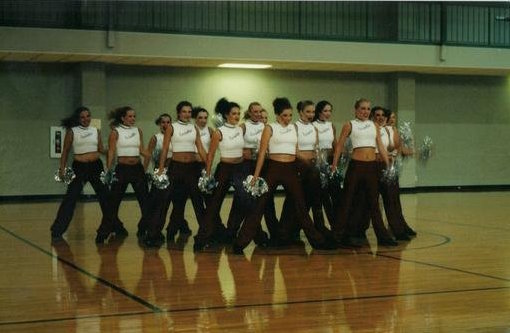
While I admire their intent (and adore my nieces and nephew), I’m just not wired for collecting. A couple of times a year, I cull my closets and drawers, creating piles to toss out, donate, or organize. I don’t buy souvenirs or collect coffee cups. I won’t allow myself to feel obligated to or weighed down by things. I actually get quite anxious if I find myself believing that a story or memory is inextricably linked to an object. If I find myself believing that without the thing the memory will cease to be, I can start to feel really squirrelly and jump into a tidying, purging frenzy. Just this weekend, I downsized four large storage bins my mom had given me of my childhood keepsakes into two small boxes – one for early keepsakes like my nursery blanket, diaper pins, and kindergarten class photos; and one for grade school report cards and high school memories from the dance team. 

During our packing party back at her house, my friend said she didn’t recall me having any collections of my own. I had to give that some thought. What have my husband and I had collected during our 20 years of life together? Passport stamps, National Park medallions for our walking sticks, bins of hobby gear (camping, skiing, fishing, golfing, flying, scuba diving…), and books, books, and more books. While we do have to account for an entire extra room for our book collection and a garage for our hobby gear when looking at real estate, I am grateful that our collections are uniquely ours. That our library of books invite us to be still and grow our minds. That our hobby gear invites us to get up and go. And that our passport stamps are our gateway to adventure. 

So do our family collections preserve our past or weigh down our future? Maybe it’s less of a question that needs a specific answer and more of a mantra to be consulted when considering what should stay and what should go. 

syncing with my sandbox

We’re in Key West for our annual long weekend, celebrating my husband’s birthday. Today is Thursday, the first full day of our trip. This time, we drove down early morning on Wednesday and are staying through Monday, planning to arrive to work later that morning or mid day.

Our annual travel tradition aligns with my husband’s birthday, but it is also a gift for me.  The gift of time, the gift of being away, the gift of no plans other than the occasional dinner reservation. In the past several years, I’ve spent most of my solo time here working on my novel.  I am happy to report that I have submitted my manuscript to an editor in Paris and am awaiting feedback (eek!). While I wait to hear news, I am left for the first time in years with long days in Key West, free to do anything of my choosing or nothing at all. 

Once we checked in to Bob’s Place at Ambrosia House on Fleming (our home away from home), my guy, our pup and I walked to First Flight on Whitehead Street for margaritas and wings, our first stop each time we arrive on island. Then we came back, took a dip in the pool, enjoyed an afternoon snooze, and then headed to Alonzo’s Oyster House for happy hour dinner. Pub fries, smoked fish dip, shrimp tacos, and a dozen oysters on the half shell, washed down with a glass of chilled rose. We closed out the evening with a beer at Half Shell’s Raw Bar, a jaunt we’ve frequented for the past 20 years, since my very initial introduction to Key West in July 2002 to visit my then boyfriend who was clerking at a law firm for the Summer and playing music in Mallory Square for extra cash. We chatted with Joe and Michele, bartenders for the past 22 and 24 years, respectively, and shared our many memories of sitting at that same bar year after year. Michele made me promise to bring my 2003 photo album by when we’re next in town. We then called it an early night so my favorite angler could gear up for fishing day one of three. 

My husband rose at 4 am this morning, packed his quintessential items — cans of Modelo, cigars, lox/capers/onion on an everything bagel scooped and toasted for breakfast on the boat ride out and a lunch wrap with egg salad (made fresh by yours truly), lettuce and tomato with pringles on the side — and biked to Garrison Bight to board the flats skiff owned by Lenny Leonard, his guide and friend for more than a decade. They pulled away from the dock at 5 am sharp, and I received a text from my guy by 7:30 am saying they had boated a 100-pound tarpon on fly, reenergizing his addiction to tight lines.

The text woke me up, and I was pleased to be awakened by such happy news. After a quick walk to the public library so my pup could pee on her rare patch of grass, I ate the resort’s brown bag breakfast in bed, enjoyed some quiet time, and then went back to sleep until 11:30 am. As I said, this trip is a gift that allows me to rest and truly restore. I then walked my fuzzy girl down to the docks, listened to a podcast episode, and talked with two groups of sailors – one aboard a Beneteau Oceanis 50 and the other aboard a custom live-aboard designed by Charlie Payne. I took the long way home, enjoying brief respites from the harsh sun in the shade of the frangipani and palm trees lining the streets of Old Town Key West.  Once back at Bob’s Place, I changed into my swimsuit and hit the pool with a couple of High Noons, a new book, and my earbuds. 

My husband returned around 3:45 this afternoon. He and Lenny boated their one tarpon early in the morning and then got several other bites. After nearly an hour of not spotting a fish, they decided to call it a day and rest up for the two more full days ahead. He is now upstairs napping with our pup and resting up for dinner. I’m in the pool enjoying my lazy day and reflecting on advice shared in the podcast this morning.

Elizabeth Gilbert, famed author of Eat, Pray, Love, is a close friend of Glennon Doyle, host of my favorite podcast, “We Can Do Hard Things”.  EG came on the podcast for a two-episode interview, celebrating the podcast’s one-year anniversary. (Funny enough, I started listening to the pod at week one, when I was here in Key West last year on this same annual getaway for Daniel’s birthday.) A caller named Lolly was having trouble moving past a betrayal by her best friend. She said that the friend kept showing up in her dreams as a constant reminder that their friendship had not had any closure. The woman said she was desperate to move on and let the friend go. While I am thankfully not in a similar situation, the advice that EG gave for moving forward is universally helpful to all people trying to be the best versions of themselves, me included. Here’s a brief excerpt from the transcript:

“My experience is that if I focus my attention on good orderly direction, healthy activities for myself, taking care of my inner little, going to sleep at the right times, nourishing my life in all ways. If I pay attention to those things, then eventually something happens behind my back and those obsessions dissolve… I can’t manufacture the end to that story, but I can turn it over to a higher power and then do what I can to nourish myself. And one day I look up and I notice I haven’t thought about that person in a month. And so what I would do, if I were counseling you, is that I would make a list of top-line behaviors: 10 things that you do that are really good for you, whatever those might be. And then every day, look at that list and try to live in those top lines. And live as much as you can in those top lines, because that’s all I am in control of. That is really all I am in control of. I’m not in control of anything else. And be willing to let time do its good work and let time do it for you, rather than you trying to do it.”

Yes, Liz, yes! When I have battled anxiety in the form of racing thoughts unable to sit still in my own skin, it is only when I lovingly but firmly committed to doing the things I knew were good for me, that make me happy and grounded, that those unhealthy, negative and brooding thoughts slow down and make space for more good stuff in between. I love how EG articulated that connection while also giving it structure, explaining that when we are living in integrity with ourselves doing the things we know make us feel most aligned with our true and best selves, we will stop focusing on the things we can’t control by finding ourselves among the only things we can – our own actions. Her advice inspired to create my own list of top-line behaviors, or what I am calling my sandbox tools – the behaviors that create space for me to find and be me.

My Sandbox Tools

  1. Spending time outside among nature, preferably in the presence of those I love
  2. Getting 8 hours of sleep
  3. Moving my body – exercise, dancing, swimming…
  4. Drinking plenty of water and eating fresh foods
  5. Getting still and quiet
  6. Reading good books
  7. Journaling
  8. Swinging in a hammock, preferably near a body of water
  9. Creating – writing, designing, inventing…
  10. Paying attention to beautiful experiences with lingering curiosity – the taste of an exquisite meal, the points of light in a painting, the unique characteristics of each sunrise/set, the smooth motion of a satellite moving across a night sky, the shimmering dance of the moon on the surface of an inky ocean, the soft crinkles around my mother’s eyes when she laughs, candlelight flickering on the plates of a fine table setting, the sound of the breeze as it moves through palm fronds, sea foam fizzing across the tops of my feet…

It’s not lost on me that one of the many reasons Key West retains its magic year after year is because, when I am here, I tap in daily to nearly all of my top-line behaviors. I enjoy beautiful experiences, pay close attention to my curiosities, rest, read, journal, meditate, swim, dance, create, and spend time with those I love. In other words, I find my sandbox and get in sync with its rhythm that only I can identify and move freely within. I imagine that’s why time spent here always feels like hitting the reset button, like an opportunity to recharge and reconnect with my best self. 

Now, rather than pack my sandbox tools away until next time, I must remember EG’s advice – to pull them out and use them, every day. That is how I will find and stay connected to my best self. On the island, on the mainland, and everywhere in between.

sleep, interrupted

Too much caffeine. Anxiety. A racing mind. An unresolved conflict. A suddenly remembered to-do. There are a million and one reasons why insomnia makes its way into the most intimate room in our homes when we are in our most vulnerable state and decides, unbeknownst to us, that tonight’s the night it will do its dirty work.

Ugh.  

More times than not, I am a really good sleeper, and I am grateful for it. I’m also a really deep sleeper. (Just ask the brother of the girl I babysat when I was a teenager about the time he had to crawl through an unlocked window because he forgot his key, and I slept through the repeated clanging of the doorbell.) 

I have definitely become a lighter sleeper as I’ve gotten older, but I still rarely wake up wide awake in the middle of the night. A la the Dos Equis guy, I don’t always wake up in the middle of the night, but when I do, I make it really count. 

I have tried all the tried and true solutions – keeping a notebook by the side of my bed to write down whatever recently remembered task has popped into my mind so I don’t lay there committing it to memory and worrying I will have forgotten it by the time I wake up. I’ve tried counting backward from 100, only to wish I had started at 1,000. I’ve tried the get-up-and-pee-in-the-dark method, the drink-warm-milk method, the read-myself-back-to-sleep method, the fan-favorite toss and turn method, the release-your-muscles-head-to-toe method, and the fuck-it-just-go-ahead-and-get-up method.  

Through the years, some of these tricks have worked from time to time, but none of them have ever worked consistently. So, I invented my own (at least I think it’s an original one, but if I have inadvertently borrowed it from someone, I apologize. And to that someone, I owe you a drink and a debt of gratitude).

Here’s how it works. (I prefer to start out laying on my back, but hey, you do you…)

First, mentally state your intention to go back to sleep. This step may seem unnecessary, but the thing is, if given the chance, our minds will crank up into runaway trains and do a day’s worth of thinking within a few minutes of darkness. That’s why this first step is crucial – you must first decide you are ready to back to sleep, commit to doing so, and give your body (and your mind) permission to drift off. Once you’ve done that, it’s time to begin. Maybe you’ll need all 10 steps, or maybe not. As long as you fall asleep, it’s working.

#1) Consciously will your body to become as heavy as possible. I don’t know about you, but if I tell myself to “relax”, it’s often counterproductive and way too metaphysical. Instead, telling myself to “be heavy” seems less challenging and like a real, measurable thing I can accomplish, no problem.

#2) Do a quick body scan from your head to your toes and notice if any of your muscles are rebelling from this exercise and still attempting to levitate you from your mattress. As you find them, release them. All of them. Even those sneaky ones that tend to fly under the radar. In your jaw, your tongue, your belly, your calves, your biceps – even in your eyeballs. Release everything. 

#3) Focus on where your skin meets your sheets (or your pj’s if you’re not a birthday suit sleeper like me). Feel the warmth of your skin. Relish your sheets, their softness. Stay here for as many moments as you like as you allow your body to sink deeper and deeper against and within your sheets.

#4) Shift your attention to your mattress. Notice if it’s soft or firm. If it’s thick or thin. If it’s smooth or tufted. Scan your mind’s eye across your mattress. See its stitching, its inner materials, its full shape and scope. Consciously become even heavier, and give your mattress permission to hold you. All of you.

#5) In your mind’s eye, scan the rectangular edge of your mattress all the way around. Then notice where your mattress meets its base. Maybe you have a box spring. Or an adjustable base. Maybe a bunk or a platform. Whatever setup you have, visualize your mattress resting on top of its base, and feel each of its layers beneath your body. Grow heavier as you rest more and more deeply into these trustworthy, capable layers of support.

#6) Visualize each of the four feet of your bed. Take your time assessing each corner. Get curious. Examine where each foot stands on the floor. Notice how the weight of your bed squishes your carpet or how the tile, wood, laminate, or concrete supports the bed’s weight without concern, without complaint. Sink your body even deeper into rest.

#7) Now visualize moving beneath the floor, descending inch by inch as inside a glass elevator going lower and lower.  If you live in a condo or apartment, visualize each floor of your descent. See the ceiling, the room, the floor. The ceiling, the room, the floor. Let each layer pass through your mind’s eye.  Keep going until you reach the very bottom and can now see the inner workings of your home or building.  See the pipes, the wiring, the joists.  Each well-designed and functioning part. Allow your body to feel even heavier. 

#8) Now take your perspective even lower, descending slowly until you reach the foundation of your home. Scan the vastness of the belly of your home, the structure that protects you year-round from sun, heat, wind, rain, snow, cold. Feel the concrete beneath you, sitting heavily upon the soil. Observe how the foundation of your home holds everything else above it, sturdy and strong.  Think of the years this foundation has been right here holding everything up, and the many years from now when it will still be here, steadfast, supporting this home. Still and strong. Allow the foundation of your home to hold you. Heavy, relaxed, and whole.  

#9) Move your perspective beneath the foundation and onto the soil. Feel the cool earth, dark and shaded. Feel how it softly, yet firmly, holds the foundation and the entirety of your home. Visualize the flattened earth directly below the foundation, and then scan the soil to the edges of the structure it holds, imagining in your mind’s eye how the soil slopes up to meet the crisp air. It is dark. Safe. Quiet. Still. Peaceful.  

#10) Finally, visualize each layer of support beneath your body, starting with the soil and ascending layer by layer, pausing on each one for a brief moment of gratitude. The earth. The foundation of your home. The structural innerworkings. The floor. The bed frame. The mattress base. The mattress. The fitted sheet. Your skin. The top sheet. The blanket. The room around you. The ceiling. The sky. Infinite space.  

You are held. You are safe. You are whole. 

You are held. You are safe. You are whole.

Give in to your drowsy dreams. 

Give in to comforting sleep. 

Rest well and renew. 

you’re going to be okay

When children fall down, they instinctively show their vulnerability. Sometimes they show it through tears or verbal cries. Maybe the fall was painful (real tears). Maybe it surprised them or scared them (real tears). Maybe they sense an opportunity for attention (not always real tears). Other times, they just need to show us where on their body they fell so they can hear from someone else that they’re okay. However minor, they rarely just get back up and move on without some sort of external acknowledgment that: 1) hey, something unexpected happened to me over there, and 2) I’m going to be okay.

A mosquito bit the top of my foot last night, and I apparently scratched it in my sleep. This morning, I was putting Neosporin and a Band-Aid on it, and I had the urge to go show my husband. I’m in my late 30s and consider myself a fairly independent woman, yet here I was wanting to show somebody my boo-boo. I had to laugh, but then it made me think.

We know that one of the big reasons cognitive behavioral therapy (also known as “talk therapy”) can be so effective is because when we speak aloud our fears/anxieties/vulnerabilities/pain, it allows us to unpack the Big Bad Scary, and bring it down to size. When we can name it for what it is, we can process it and eventually move through it. At several points in my life, I’ve found myself stuck in one (or more) of the steps and benefited greatly from professional therapy by someone trained and credentialed to help me move forward in a healthy way. Journaling, prayer, even voice memos can be really effective pressure valves, but when it comes to the getting unstuck stuff, it’s not enough to just “get it out”. The real magic happens when that other human being is present with us, bearing witness to our pain. My husband, God love him, is a fixer by nature. Sometimes when I need to talk through something I have to tell him: I don’t need you to analyze the problem or propose solutions. I just need you to see me and hear me… and, if you’re feeling really generous, maybe hold me afterward and kiss my hair.

Am I self-reliant? Ummmm, to an extent. Do I also need to be validated from time to time? You betcha. And you do, too. So the next time you tell yourself that you’re “just being needy” maybe there’s more to it. Anthropologists say that we are naturally drawn to fire because our ancestors relied on it for warmth, protection, and community – in other words, for survival. Maybe the child-like urge to show my husband my Band-Aid was an evolved expression of something more primitive. Maybe we’re actually hardwired to share our pain – physical, emotional, psychological and otherwise. The truth is, no matter how old we are and no matter how lightly we land, there will always be healing power in those five precious words: You’re going to be okay.

sawubona

I recently discovered a new podcast called “Meditative Story”.  It launched in 2019, so I decided I would start listening to it from the very first episode and work my way forward.  After the first listen, I was hooked.  Each episode features a different author who shares a pivotal moment in their life that essentially changed everything.  The show’s host, Rohan Gunnatillake (“Guna-till-a-kuh”) gently pauses the stories periodically to share mindfulness prompts that help root you in the present moment and bring the story to life in a whole new way.  The stories usually last about 10-15 minutes, and then Rohan closes each episode out with a guided meditation and, what he calls, a “mindfulness micro step” that he encourages you to try and incorporate into your day.

Sidebar: No, this is not a paid promotion… although I admit it’s starting to sound like one.  I’m just a sucker for good stories.

Yesterday I was out for a walk with my dog and put on an episode.  This particular one was titled “Creating space to stand in truth”, told by Dr. Susan David, a psychologist and author from South Africa.  It’s episode 21 from the 2019 season, or in other words, not an episode I picked on purpose.  It just happened to be the next one in line.  Yet I knew about three minutes in that, while I wanted to stop listening, I simply couldn’t.

It was one of those rare moments in life.  I’ll do my best to describe it, and maybe you’ve ever experienced something similar.

Susan’s podcast story begins in her happy, South African childhood.  When she turns six years old, something shifts and she starts being preoccupied, basically obsessed, with death. She explained from a psychological perspective that six is around the age kids first realize that everything alive must one day die.  She said her obsession would kick in for her every night at bedtime.

I felt my gut tighten, but I kept walking.

She described the most wonderfully, comforting bedtime ritual – drinking hot cocoa with her parents, and then getting carried tenderly to her clean, soft bed.  She would nestle in and receive good night wishes and affection from her parents, which left her feeling completely at ease.  But as soon as her parents left her room, and she started hearing them talking in the other room, she would be overcome with fear that one of them would die, or that one of them was already dead at that very moment.

Susan would cry out to her parents trying to sound calm, “Goodnight Mum!  Goodnight Dad!”  And they would both answer back “Goodnight Susan”, and she would relax.  Then a few minutes later she would feel the panic begin again, and she would cry out once more.  This time her parents would reply somewhat frustrated and remind her that it was time for her to go to sleep.

I felt the sidewalk shift under my feet – not literally, but as a strong sensation.  Like I was suddenly walking across the deck of a rocking boat with unsteady sea legs.  If this had been the first (or second or tenth or fiftieth) time this had happened, the sensation would have likely sent me into a panic attack overwhelmed by fearful thoughts that something was wrong with my brain or that I was about to pass out.  The truth is that I was diagnosed with anxiety and panic disorder more than a decade ago and didn’t start taking medication for it until about six months ago.  All this time of self-care, years of therapy, reading anything I could get my hands on and generally being obsessed with finding answers – well, it has given me a lot of time to get to know my anxiety really well.  I now recognize this shifting sensation as my form of anxiety’s signature symptom.  I now know that when it happens, it means I’ve touched on something unresolved in my psyche.  I have also learned that I shouldn’t run away from it, but rather lean toward it and see what it’s trying to teach me.

It’s almost like I feel life shift onto a new track in an unexpected direction.  Reflexively, I want to get off the train and start walking home.  Yet I somehow know that if I can just hang on and not look away, I’m bound to learn something really important.

Susan described being alone in her childhood bedroom overwhelmed by irrational fears of death, and I knew as I listened, exactly why my anxiety kept tapping my shoulder and asking me to pay attention.  The thing is, as a kid – probably around six years old, come to think of it – I started having similar troubles at bedtime.  With my head laid sideways on my pillow, I could hear my heart beating softly in my ears.  I would find myself counting my heartbeats, irrationally believing that if I fell asleep and stopped counting them that my heart would stop and I would die.

Yeah, just a little bit heavy.  Up to this point in my life, I had never heard anyone else say they, too, had this preoccupation with mortality, especially at such a young age.

In addition to my compulsive counting of heartbeats, I also dreamed extremely vividly.  When I would eventually drift off to asleep, I would often have nightmares so real and severe that my pediatrician diagnosed them as “night terrors”.  He told my parents I would eventually grow out of them.  Thankfully I didn’t have the nightmares every night, but when I did, I would wake myself up crying, usually sobbing actually.  It would take me several minutes to recover and realize that whatever bad thing happened in my dream didn’t actually happen in real life.  Sometimes I was running from someone; sometimes someone was trying to kill my family, and I was the only one who knew; sometimes I was being forced to jump out of an airplane; sometimes they were just a series of scary scenarios that made no sense at all.

When the night terrors first started, I would cry out to my parents, and they would come in and comfort me until I got quiet again.  After many, many nights of this bedtime hell, we all got tired of it.  I had begun crying the moment they left my room, so terrified of the night ahead.  My parents eventually put their foot down and stopped coming in at the sound of my cries.  I’m not sure if they thought that their attention was feeding the problem, or that they just needed to break the routine.  Either way, they eventually thought it best to let me learn to get through the nights on my own.

It was just too hard.  So I adapted.  I realized that the best thing I could do if I had a night terror was stay quiet and pull myself together.  Not so that I could go back to sleep – again, that was just too hard – but rather so I could silently sneak into my parents’ room with my sleeping bag and spend the rest of the night on the floor next to their bed, comforted by the sound of their breathing.  I would usually get in trouble, especially if Dad was first to see me in the morning.  If Mom woke up first and felt my sleeping bag’s slick rayon under her bare feet, she would usually gently nudge me awake and help me carry my stuff back to my room before my dad woke up.  But not always.  She wasn’t big on keeping secrets from my father.  Regardless, I would always get a pep talk back in my room about knowing that I was a big girl and that I had to learn to sleep in my own bed and that I shouldn’t come into their room without permission.

Honestly, these messages always fell on deaf ears.  It was morning, and all was well.  I was so grateful to be awake and at the start of a new day. I knew I had many hours ahead before night would be back. I just wanted to get on with it, happy to agree with my parents well-intentioned lectures.  Whatever I needed to agree to so I could get outside and play and be a kid, I was willing to do it.

I don’t know what caused me to obsess about my heartbeat or to have night terrors.  I used to think maybe it was because my parents let me watch “Pet Cemetery” when I was barely old enough to talk, plopping me down in front of the TV with my cousins at a family Christmas party before going into another room with the adults.  Two of my grandparents had died when I was five years old.  Perhaps as I watched them slowly die from cancer and then was eventually told they had gone to heaven, maybe I asked for more specifics about their last moments on earth, and maybe I was told their hearts just eventually stopped beating or that they had slipped away peacefully in their sleep. Perhaps I saw something on TV or a mean kid said something upsetting about death.  Or perhaps it just happened.  I really don’t know.  But I was plagued by night terrors for years.  I eventually outgrew them by about age 10, but to this day, they still come around once in a blue moon.  Thankfully, I can now separate the dreams from reality much more quickly.

According to Susan, it was likely just part of my growing-up experience.  As I listened to her all-too-familiar story, I tried to just keep walking and ignore the rising anxiety in my core.  Anyone who has battled anxiety knows that this is not a smart move.  Pushing through may postpone the anxiety or weaken it temporarily, but it will always comes back stronger and stronger each time until it you finally acknowledge it properly.  This is a truth I know all too well, but because I’m human and don’t always do the right thing, I chose to ignore the anxiety and kept walking.

As Susan’s story continued, my anxiety kept tapping harder and harder, until I could feel a full-blown anxiety attack beginning to bloom. I kept walking and smiling at passersby determined to push through it, but it only got worse.  I was just about to sit down, pretend to be interested in something on my phone, give in and let it run its course.

Just then, Rohan popped in with a meditative prompt.  Honestly, it was like his words were directed at me, meant specifically for me.  He said something to the effect of, “This story may be bringing up some difficult things for you, and that’s okay.  Take time to breathe and reflect before we move on.  Even take a moment to pause the podcast if you like.”

And with Rohan’s permission, I did just that.  I paused the podcast and walked for another five minutes with my headphones off and around my neck.  I listened to the seagulls, the traffic, the leaves crunching underfoot, Fischer softly panting as we kept moving.  When I had regained my calm, I thought to myself, I’m going to finish this episode later, turn around early and start walking back home.  It’s all just a little too much for me right now.

I put my headphones back on and held down the Bluetooth button to prompt a Siri request on my iPhone.  I wanted to ask her to play a song from my workout playlist, but my phone kept going right back to the podcast.  I took my workout sleeve off my arm, unzipped it, pulled out my phone and manually navigated to my music library.  This time, the app would not open.  I tried the double-click, home-button trick and swiped up to exit out of all my open apps.  I again tapped on the music app, but nothing.  It just wouldn’t load.  All signs were telling me to finish the podcast.  Not later, but right then.  I could feel the momentum, and I knew it had something important to teach me, whether I was ready or not.  I took a deep breath and resumed the story.

Young Susan was now in her parents’ room, snuggled between them, and confessing to them that she was afraid if she went to sleep that one of them would die.  I admired how specific and forthcoming she was, confessing such an embarrassing truth to her mom and dad that that would obviously not understand.

Susan said she honestly expected them to respond to her explanation with something along the lines of “it’s okay”, “we’re not going anywhere”, “we’ll be right here when you wake up tomorrow”.  But to her surprise, they didn’t.  Her father told her that he would die one day.  And so would her mom.  And so would she.  That they weren’t superhuman people who would live forever.  That he understood that it was scary to think about.  Even for him sometimes.  But he said that death was one of the greatest reminders to enjoy life and appreciate those you love.

Listening to this exchange, I found myself thinking that this was a super grownup message for a six-year-old to hear, telling her that her worst fears would eventually happen.  I instinctively wanted to shield her young ears from such a difficult truth.

Susan continued in her narration and said that she was so grateful to her father for teaching her at such a young age that everything wasn’t always okay.  Life could be scary, and that what was okay was to be honest about that.  She said he taught her that it was important to create space for your feelings and acknowledge them.  That courage wasn’t living without fear, but rather moving forward with life despite the fear.  This moment with her parents and her father sharing his own vulnerabilities changed Susan’s entire perspective.

She then introduced the word, Sawubona – an African word that in Zulu means “I see you, I value you, and you are important to me.” In these fearful moments in her parents’ bed, her father had truly seen her and acknowledged her emotions and validated that what she was feeling was, indeed, okay.

When Susan grew up, she became a psychiatrist and then a parent herself.  When it came time to take her infant son for his first vaccines, she wasn’t prepared for the sudden shift in his happy mood to sheer terror as he felt the sting of the shots. She tried to comfort her screaming baby by instinctively telling him “it’s okay, sweetheart. It’s okay.”  She was surprised when the pediatrician touched her arm and said something to the effect of, “Susan, it’s not okay.  He’s in pain and he can’t express himself to you and what he’s feeling other than to cry.”  The doctor told her there would be days when something that had always made him happy would suddenly make him sad.  Her son wouldn’t know why, and neither would she as his mother.  Some feelings were unexplainable, but they, too, needed to be acknowledged.

When she got home, Susan bemoaned to her husband that she was a psychiatrist with an advanced degree in understanding human emotion, and here she was trying to invalidate their baby’s feelings the first chance she got.  Her husband listened patiently to her emotional rant until she got it all out.  He then smiled and told her, simply, “it’s okay.”  And they both laughed.  And I did, too.

The story was now over, and Rohan came in to do the closing meditation, focusing on the meaning of Sawubona, “I see you”.  By this point, I was back in front of my building, standing in the shade of a tree to listen to the end of the episode.  Rohan kept repeating “I see you” followed by silence, and then he asked, “What’s coming up for you? What did you see?  How did you feel?”

In my mind’s eye, I saw a young girl – and then recognized her to be me at around the age of six, afraid and alone in her bedroom, desperate to be understood and to be okay.  Before this moment, I knew that my anxiety needed to be acknowledged and addressed, and that eventually I would understand the source of it in the first place.  I had talked with my therapist – make that therapists – about the night terrors and the death of my grandparents, and countless other honest moments, trying desperately to identify the cause.  I had learned that all emotions should be acknowledged – even the hard ones – but I was only applying it to my current self.  Susan’s story showed me that I needed to dig a little deeper and apply the same truth to my younger self as well, for it was her feelings that had yet to be acknowledged.

See, the difference between Susan’s story and mine is that my well-meaning parents kept telling me there was nothing to be afraid of.  As I grew older, my well-meaning spouse kept telling me there was nothing to be afraid of.  Well-intentioned as they were, their dismissive message only made me think that something was wrong with me.  That my feelings were bad.  That I needed to stifle them and carry on.

I could now, in this moment, clearly see that my anxiety had stemmed from normal childhood fears that were dismissed, unacknowledged, stifled, and therefore fed and nourished until they grew into something exceptionally powerful and eventually diagnosable.  This realization seemed to instantly untangle a knot in my psyche.  This simple truth of creating space for my feelings – all feelings, past and present – had eluded me for so many years, and it had now finally shown up clear as day.

The next time Rohan said “I see you”, it’s like I was suddenly saying to the little girl in my head what I wished someone had said to me all those years ago.

Hi Sweetheart. I understand.  Everything is not okay right now because you are very much afraid.  But it is okay to be afraid.  The unknowns of life are scary, for all of us.  You are not alone.  Everyone deals with fear from time to time, and we go on living with it.  Everyone realizes that one day they will die, and it’s natural for that to sound scary. You’re so young and healthy.  You’re a little girl.  Dying doesn’t make sense to you.  That is what is okay.  Death is the greatest of the unknowns and, therefore, is the greatest fear of all for nearly everyone at some point. Think about it this way.  If everything that is alive must die, then death is a part of life, right?  And why would God make something that all of his children, every plant, every cloud, every animal, and every living thing have to go through a scary, bad thing to be feared?  The truth is I don’t think he would.  I think what makes it scary is that no one who is dead right now can come back and tell us what it’s like. So it feels unnatural because it’s so unknown and so unexplained.  But death is completely natural.  It also does something really beautiful if you think about it.  It makes us appreciate our lives so much more and enjoy our families, our friends, our beautiful planet, and all the things that make us smile.  That makes death a gift.  Knowing that all of this wonder and love and happiness during our earthly lives won’t last forever.  When we know that, we learn to savor life.  And you have many, many years of life ahead to enjoy, experience and savor.  While we’re at it, let’s celebrate that powerful imagination of yours that will, no doubt, take you far in life.

Sweetheart, I see you – in all your fear and confusion and in all your beauty and wonder. I value you, and you are important to me.

I now forgive my parents for not having known these words to speak to me.  For not having the intellectual capacity and life experiences to formulate this advice at that time in our lives.  I forgive them for their limitations.

I am grateful for their love and for parenting me the best they knew how.  I am grateful that I have now had – and will continue to have – experiences they haven’t.  I am grateful that I am intellectually curious and have access to literature, professors and podcasts they know nothing about.

I am grateful to Dr. Susan David for sharing her story.  And I am grateful to her father for showing me the importance of creating space for my feelings.  All of them.  Then and now.

Sawubona.
 

coming in for a landing…

I have a recurring dream when stress peaks in my life. I am in an unknown building. I look outside the window to find dozens of tornadoes churning silently on the ground, moving wildly in all directions – some far away, some mere blocks from where I am standing, frozen and unable to look away, awed by their number and unpredictable movements. I am with strangers, and I am always the first to see the cyclones. I alert the group with me, and we run. I lead the way, as we wind deeper and deeper into the building, lower and lower.


I am all at once lost, yet somehow know the way.


We run as far as we can go into the darkness of a closet or under the bottom slope of a stairwell. We huddle together tightly and wait. I feel the tremor of impact. And wake up.


A quick Google search of “tornado dream” returns analysis ranging from fear, to lack of control, to destructive behavior. And I would tend to agree. I had a tornado dream last night, but this time, it was different. And I think I know why.


This time, I am in a house. I look outside the window and see a tornado so massive I can’t see its sides. It is less than 100 yards away, gray and gruesome, and packed with debris. I turn to the people inside. There are maybe 10 of us, all told. This time I recognize a few faces among the group. My summer intern and my parents. The others are strangers. I tell them about the tornado, and we begin our journey downward. We descend what must be three or four stories, with smooth, sloping floors and wide circular hallways. It gets darker and darker the lower we get. I find an underground room with a slanted back wall that goes all the way to the floor. We huddle together, me on top with my arms over everyone, and my face looking down on the web of arms.


This time it is silent, except for my mom’s voice as she counts slowly and steadily – a habit she does in real life to get through something she fears. I remember her doing this when I was a child as we drove over tall bridges or when I begged her to ride the freefall with me at Six Flags.


I feel the tornado begin to lift the house. It is surprisingly peaceful. I recall that it felt much like when a plane takes off, but it was silent. When Mom reaches the count of 10, the house sits softly back on the ground. We walk outside. It is now damp and dark. The storm has subsided. I say to my intern that I have always been afraid of tornadoes, but that we survived and I have conquered my fear. She smiles. I wake up.


Yes, there is stress going on in my life, but I am now dealing with it differently. I am learning to stand on the proverbial shore, rather than getting swept up in the current. My parents and my intern represent those that I feel are most vulnerable right now, that I feel most protective of as they navigate current situations. I still have a lot to learn about overcoming my anxiety demons, but I have come a long (long) way, and I believe last night’s dream was confirmation of my hard-won progress.


I am grateful and encouraged to continue this path of healthy growth, and to continue swimming toward those sharks.


reinventing ourselves: possible or mythical?

In the journey of life and self-discovery, I’ve been thinking a lot lately about the concept of reinvention. Here’s my question: Can we really reinvent ourselves and leave our old baggage behind, or are we destined to keep the unsightly stuff from our past as permanent carry-ons?

In my late 20s and early 30s, I started getting a lot more anxious about things that used to be sources of joy (social situations, traveling, family gatherings, etc.). I would find myself – pardon the heavy term – mourning my younger self and wishing I could summon her spontaneity, free spirit and courage as super powers for wholesome living now. I wanted to break the chain of scheduled routines (control), keeping up appearances (control), staying within my comfort zone (control) and leap into life with that same child-like enthusiasm I once had years ago.

Recently, my best girlfriend from childhood came for a visit. We had a wonderful time reminiscing about high school boyfriends, friendships, trips and the many dramatic moments of adolescence. We were on our school dance team together for all four years of high school and, every summer, we would travel to UDA dance camp to compete against other schools in our state. When you’re a teenager dreaming of being a real Rockette at Radio City, you believe summer UDA camp is the gateway to the big leagues. Here’s how it works …

You bunk in a real dorm room at a real state university (a big deal, especially for pre-pubescent girls … hey, I was a late bloomer). Then you spend your days at the university sports arena learning multiple dance routines with girls from other schools. You may be the only girl from your school in your group, or if you’re lucky, there will be maybe one other girl you know. Then you spend all night (literally) practicing the routines in your dorm room or hallway until your fellow teammates deem you ready for the competition at the end of the week where you will be judged by real judges (Looking back, I’m not sure why I was terrified of the judge panel – they were probably just ex- high school dancers themselves with real day jobs).

At the end of each routine, you stand quietly looking at the ground (no eye contact permitted) with your hands behind your back. The judges then place one of three ribbons in your hand: White if you effed it up royally, red if you were mediocre, or blue if you were the bomb dot com (it was the late ’90s when we used terms like ‘bomb dot com’).

Our dance team sponsor (for me, my Home Ec teacher, Mrs. H), would then collect the team’s ribbons and hang them on a hanger. At the end of the week, the hanger would be filled to the brim of – what you hoped was – all blue ribbons. Then we would travel back to our small town with at least 15 dance routines to perform the rest of the school year at basketball games and pep rallies (no way would booty-shaking make it onto the football field in my town).

So, back to reinvention …

During our walk down memory lane over spiked lemonades pool side, my friend reminded me of our senior trip to UDA camp, when – as only seniors can – I tried out for UDA All Stars (the biggest of big deals). As an All Star tryout, you had to come up with your own 30-second routine and perform solo in front of – get this – the entire camp. Yep, all your teammates, all the girls from all the schools, and all their parents. Oh, and the scary judges. And this was in addition to your other routines you had to learn along with everyone else. AND, only three winners would be chosen and get to go to Paris to compete for international All Star status. Whoah. I’d never been out of the country! I’ll come back to this in a few moments …

So one of my teachers of the normal routines ended up being sick with the flu all week and couldn’t practice with us, so we all bombed it during the competition. With the stress of not having had ample practice time, embarrassing myself during the performance and working my toosh off for my All Star routine, I had a little (not so little) bit of a meltdown.

Standing there with my hands behind my back after performing (or should I say looking dazed and confused while marking time for more than half) the routine that no one knew, I could feel the white ribbon in my hand. Traditionally, once all dancers have their ribbons in their hands, the judges count down from 3, then everyone looks at their ribbons, jumps up and down while shrieking only the way teenage girls can, and then everyone runs to their team’s wire hanger to display their ribbon with pride.

Not this time. No way, Jose. I balled that freaking ribbon in my hand so tightly and refused to look at it. Instead I ran straight to my Mom with a fist full of ribbon and a face full of hysterical tears.

Pause: I remembered none of this. In my memory, it was all unicorns and rainbows, and I had completely forgotten about this less-than-stellar moment in my short-lived dance career. Okay, let’s go back …

My mom told me all the reasons it was okay to get a white ribbon, reminding me that the teacher was sick and that I was under a lot of stress and that my teammates would understand and blah blah blah. I knew she was trying to console me, but I knew my perfect blue-ribbon run was over. Only one other person on our team had ever received a white ribbon, and three years later, people still used her as an example. Snotty and splotchy, I refused to open my hand. White ribbon be damned. Finally, my mother pried my fingers open only to reveal … a blue ribbon.

You can imagine my surprise when I realized the sick instructor had shown pity on all of us and given everyone an honorable blue ribbon. I knew in my heart that I deserved a white ribbon. None of us deserved blue.

And then I snapped out of my momentary goodwill, got myself together and cheerfully hung my most infamous blue ribbon on the wire hanger with pride. Whew!

Then it was time to perform my All Star routine. I stood with the other girls in the back waiting for my name to be called. I remember hearing my heart pounding so loudly in my ears that I actually asked a girl from Spartman HS (my rival) if she could hear it. Way to play it cool.

Several girls decided at the last minute that the pressure was too great and just didn’t go out there when their name was called over the loud speaker. For a moment, I thought about it and came so close to quitting. After all, I had gotten my blue ribbons. Did I really need Paris, too?

And then they called my name, and it was too late to back out. I ran out onto the floor, waited for the music to start, and then began my routine. I remember being in awe that my mind could be completely freaking out while my body flew around the floor, dancing to the rhythm just as I had practiced.

When I hit the last pose, the crowd roared, and I saw my mom and my teammates jumping and cheering. Then I saw smiles on the judges faces. I had won All Stars and gotten one of the coveted three spots. I was over the moon.

Sure, it was fun to relive my overblown reactions to big-deal moments of teenagerdom with my friend, but it also taught me an important lesson. Much like people who struggle with body dysmorphia, I had my own brand of youth dysmorphia.

I had rewritten the truth of my past into a cloud of naïve bliss, forgetting that my brave, spontaneous, free-spirited younger self had her own fears, stresses, challenges and insecurities, and just like my current self, she sometimes wanted to run for the hills.

But she didn’t. And I won’t either. There’s too many great opportunities up for grabs for those who are brave enough to keep going.

So, back to our question: Can we reinvent ourselves? Not in an instantaneous Abbra Cadabra way, no (not if you want it to last any way), but slowly and over time, I believe we can. No matter our location on life’s continuum, I believe the thread of who we are at our core remains the same, but it evolves, grows and expands with every choice, new experience or change in direction we’re brave enough to learn from and embrace.

And, when things get tough, it’s good to know we’ll always have Paris.

17337_490813095156_7621034_n